Fance Home
Choosing bathroom finishes is not only a design decision. It is a water-management decision.
The 2024 Houzz U.S. Bathroom Trends Study shows continued investment in upgraded showers, surfaces, and storage. These improvements face daily moisture, cleaning chemicals, heat, and repeated impact. The Tile Council of North America also emphasizes proper tile selection, installation, and substrate preparation. A beautiful surface can still fail when water reaches the structure behind it.
That is why homeowners need to understand how to choose bathroom materials for durability before comparing colors or prices. Porcelain tile, solid-surface panels, quartz, stainless steel, and moisture-resistant cabinetry each perform differently. Their durability depends on water absorption, joint design, edge protection, ventilation, and maintenance. The strongest material is not always the best material for every bathroom.
Building-science expert Joseph Lstiburek often reduces the problem to one practical warning: “Water is the enemy.” His principle remains useful, although it does not answer every design question. A low-absorption tile may outlast natural stone, but poor waterproofing can still cause hidden damage. I have seen this overlooked detail become the most expensive part of a renovation.
This guide compares seven bathroom materials through performance, maintenance, appearance, and installation risk. It also considers real conditions, such as a steamy family bathroom, a small rental bathroom, or a wet room with frequent splashing. Standards matter. So does honest judgment. Durability is never guaranteed by a product label alone.
7 Best Bathroom Materials for Durability: How to Choose?
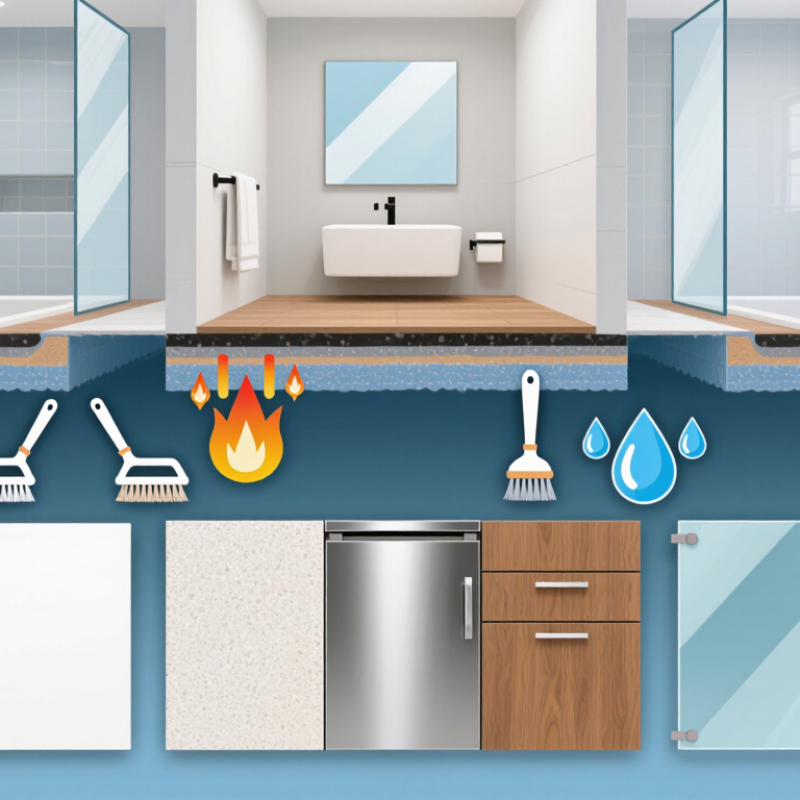
Durability begins with four practical tests: water absorption, slip safety, stain resistance, and cost. Porcelain tile usually absorbs very little water, making it suitable for shower walls and floors. Ceramic tile offers similar flexibility, but some products absorb more moisture. Natural stone looks refined, yet it needs sealing and regular care. Glass resists stains, although its smooth surface can become slippery when wet. Acrylic is warm and affordable, but scratches may show over time. Stainless steel handles moisture well and cleans easily. Engineered quartz resists stains, but heat and installation costs deserve attention. No material wins every test.
For floors, check the product’s slip-resistance data, not only its appearance. Small textures can improve grip, but deep textures may trap soap and dirt. Stain resistance also depends on grout, sealants, and cleaning habits. A low-cost surface may require more repairs, while an expensive option may still fail under poor installation. Ask for test results and maintenance instructions. Local standards can differ, so verify the rating before purchase.
Tips: Place textured porcelain near the shower entrance. Wipe stone surfaces after use. Test a sample with water, soap, and hair dye. Wait 24 hours before deciding. Cost is not durability. Think beyond the first invoice.
Comparison of typical bathroom material performance using a 1–5 rating scale. Higher scores indicate better performance. Cost affordability is scored higher when the typical material and installation cost is lower.
Water absorption reflects resistance to moisture penetration; slip safety assumes a properly textured or matte finish; stain resistance reflects typical ease of cleaning and resistance to common bathroom stains. Actual performance varies by product specification, surface finish, installation quality, and maintenance. Ratings are based on common material characteristics and relevant testing concepts from ANSI A137.1 and ANSI A326.3.
In bathroom renovation work, I judge materials by water exposure, cleaning habits, impact resistance, and repair difficulty. Porcelain is dense, low-absorption, and dependable for floors and shower walls. Ceramic usually costs less and offers more colors, but softer surfaces can chip more easily. Both need properly sealed grout lines.
Natural stone brings strong visual character and can last decades with regular sealing. I once used pale stone near a shower, and mineral stains appeared faster than expected. Quartz resists stains and needs little maintenance, making it practical for vanity tops. However, seams remain visible, and harsh heat or careless installation may cause damage.
Glass makes small bathrooms feel brighter, though textured glass needs frequent wiping. Vinyl feels warmer underfoot and handles moisture well, but standing water can expose weak seams. Terrazzo offers excellent wear resistance and a distinctive finish, yet its weight and installation cost require careful planning. Check the subfloor first. Choose porcelain for demanding floors, quartz for counters, and vinyl for comfort. Stone, glass, and terrazzo reward careful maintenance, not neglect. My preference can change after seeing the room’s ventilation, traffic, and cleaning routine.
Choosing bathroom materials starts with moisture resistance, not appearance alone. Porcelain tile is a strong option because it absorbs very little water. For dependable performance, verify a water absorption result of 0.5% or less, tested under ISO 10545-3. This benchmark helps distinguish dense porcelain from weaker ceramic products. Ask for the test report, not only a product description.
Look closely at shower walls, floors, and areas around the basin. These surfaces face repeated splashes, steam, cleaning, and temperature changes. A dense tile is less likely to retain moisture beneath its surface. Still, low absorption does not make every installation waterproof.
Grout joints, corners, drains, and damaged edges remain vulnerable. Small details matter.
Check the tile’s intended use, slip resistance, thickness, and surface texture. A glossy floor may look elegant but become difficult to manage when wet. A heavily textured surface can improve grip, yet collect soap residue. I would also inspect several boxes for shade and edge consistency. One overlooked issue can weaken an otherwise careful project.
The test value is essential, but it is not the whole decision. Good bathroom durability comes from matching verified tile performance with sound installation and realistic daily use.
Durable bathroom materials must handle water, cleaning chemicals, temperature changes, and daily foot traffic. In wet zones, slip resistance deserves equal attention. ANSI A326.3 offers a practical way to evaluate tile surfaces through dynamic coefficient of friction testing. The results help identify whether a product suits interior wet areas, exterior wet areas, or other conditions.
Do not choose tile by appearance alone. A glossy porcelain surface may look clean but become risky when soap and water cover it. Ask for the tile’s ANSI A326.3 classification and testing information. Check whether the rating applies to interior wet use.
A shower floor also needs suitable size, slope, grout joints, and drainage. Small-format tiles can create more grout lines, which often improve traction and help follow curved surfaces.
Test the entire installation, not only a loose sample. Dust, body oil, cleaning residue, and worn grout can change how the floor feels underfoot. Bare feet and wet sandals may behave differently. I have found that a surface can feel secure during a dry showroom visit yet feel less reassuring after a long shower. That experience is easy to overlook. Ask the installer about cleaning routines and maintenance wear. ANSI classification supports better decisions, but it cannot replace careful design, proper installation, and realistic wet-condition evaluation.
7 Best Bathroom Materials for Durability: How to Choose?
Choose step by step: match ASTM ratings to moisture, traffic, and maintenance. Start with water exposure. ASTM C373 classifies tile by water absorption: impervious tile absorbs 0.5% or less, while nonvitreous tile exceeds 7%. Use impervious porcelain for shower walls, floors, and splash zones. It tolerates repeated wetting better. Yet grout remains vulnerable. Sealant and joint design still matter.
Next, examine traffic and impact. ASTM C648 measures tile breaking strength, while ASTM C1027 evaluates visible surface abrasion. Ask for the complete test report, not a vague “commercial grade” claim. Busy family bathrooms need stronger surfaces near entrances and vanities. Small chips often begin at exposed corners. Poor installation can defeat excellent material ratings.
Maintenance changes the decision. Textured stone may improve wet-foot traction, but its pores can hold soap and mineral deposits. Smooth glazed tile cleans faster, though it may feel slippery when wet. EPA WaterSense reports that certified showerheads use no more than 2.0 gallons per minute and can save an average household about 2,700 gallons yearly. Lower flow reduces splash, but it cannot correct weak waterproofing. I have seen attractive bathrooms fail at the threshold. The rating was fine. The detail was not. Choose materials only after checking moisture, traffic, cleaning habits, and installation quality together.
A practical comparison using recognized ASTM test methods and common performance benchmarks.
| Material | Relevant ASTM Test or Rating | Moisture Performance | Traffic & Wear | Maintenance Demand | Best Bathroom Uses | Overall Durability Fit |
|---|---|---|---|---|---|---|
| Porcelain Tile | ASTM C373 water absorption: porcelain tile is generally classified at ≤0.5%. ASTM C1027 can be used to evaluate glazed-surface abrasion. ASTM C627 evaluates installed floor-tile system performance. | Excellent. Very low absorption makes it suitable for shower walls, floors, wet rooms, and areas exposed to frequent splashing. | Excellent when the selected surface and installation system are appropriate for the expected foot traffic. Unglazed or textured surfaces can provide strong wear resistance. | Low. Routine sweeping and neutral-pH cleaning are normally sufficient; grout joints require periodic cleaning and inspection. | Main floors, shower floors, shower walls, wall surrounds, and high-use family bathrooms. | Excellent |
| Ceramic Tile | ASTM C373 measures water absorption. Ceramic tile commonly has absorption above the porcelain threshold, so the product specification should be checked for the intended wet location. ASTM C1027 may assess glazed abrasion. | Very good for walls and many bathroom floors when properly installed. Product absorption and the waterproofing system matter, especially in showers. | Good to very good. Select a surface and wear classification suitable for the expected traffic; avoid delicate glossy finishes on heavily used floors. | Low to moderate. Tile is easy to clean, but grout may collect soil and requires regular maintenance. | Bathroom walls, moderate-traffic floors, backsplashes, and tub surrounds. | Very Good |
| Quarry Tile | ASTM C373 can be used for water absorption. ASTM C627 may be used to evaluate the performance of the complete installed floor system under rolling and concentrated loads. | Good when the tile, grout, and substrate are correctly detailed. It is generally less moisture-resistant than porcelain, so shower applications require careful product selection and waterproofing. | Excellent for demanding floors because the through-body material does not rely on a decorative glaze for appearance. | Moderate. Textured surfaces can retain soil, and sealing may be recommended depending on the product and installation. | Commercial-style bathrooms, mudroom-connected bathrooms, and heavy-use floors where slip resistance and wear are priorities. | Very Good |
| Natural Stone | ASTM C97 measures absorption and bulk specific gravity; ASTM C241 evaluates abrasion resistance of certain stone surfaces. Results vary substantially by stone type, finish, and thickness. | Variable. Dense stones can perform well, while porous stones may require sealing and more careful moisture management. A stone-specific absorption result is essential. | Good to excellent depending on the stone and finish. Polished surfaces may show etching or scratching more readily than honed or textured finishes. | Moderate to high. Sealing, prompt spill removal, and stone-compatible cleaners may be required; acidic cleaners can damage carbonate stones. | Feature walls, vanity tops, carefully selected floors, and premium bathrooms where appearance is a major priority. | Good, but material-specific |
| Terrazzo | ASTM C627 can help evaluate the installed floor system. For cementitious terrazzo, project specifications may also reference concrete-related abrasion or absorption testing; the applicable standard depends on whether the terrazzo is cement-based or resin-based. | Good when properly sealed and detailed. Resin-based systems are typically less porous than cementitious systems, but joints and penetrations still require careful waterproofing. | Very good to excellent. Its solid composition can tolerate substantial traffic, although surface finish and aggregate selection affect wear. | Moderate. Regular cleaning is simple, but periodic resealing or refinishing may be needed depending on the system. | Large-format floors, commercial bathrooms, accessible bathrooms, and seamless-look designs. | Very Good |
| Solid-Surface Acrylic or Polyester | ASTM D638 and ASTM D790 are commonly used for tensile and flexural properties of polymer-based materials. ASTM E84 may be specified for flame-spread and smoke-developed characteristics where applicable; confirm the product’s exact test documentation. | Excellent for integrated vanity tops, wall panels, and shower surrounds because the nonporous surface has few or no grout joints. | Good. It resists routine bathroom use, but softer surfaces can scratch or show heat damage more readily than tile or stone. | Low. Seamless construction simplifies cleaning, and many minor scratches can be repaired or refinished according to the fabricator’s instructions. | Shower surrounds, vanity tops, integrated sinks, and low-maintenance bathrooms. | Very Good |
| Resilient Vinyl Sheet or Luxury Vinyl Tile | ASTM F1303 covers vinyl composition floor tile, ASTM F1700 covers solid vinyl floor tile, and ASTM F1913 covers vinyl sheet flooring. The exact standard depends on the product construction; follow the manufacturer’s declared classification and installation requirements. | Very good when seams are properly welded, sealed, or otherwise installed according to the product system. It is not a substitute for a waterproof substrate or shower-pan system. | Good for residential and moderate commercial traffic. Surface wear, indentation, and seam performance depend on the wear layer, construction, and installation quality. | Low. It is comfortable underfoot and easy to clean, but standing water and harsh chemicals should be avoided unless specifically permitted. | Residential bathroom floors, accessible bathrooms, rental properties, and renovation projects requiring a softer walking surface. | Good |
How to choose: First confirm the moisture zone, then select a product with suitable absorption and surface performance. Next, match the installed system to expected foot traffic and rolling or concentrated loads. Finally, compare grout joints, sealing requirements, repairability, and daily cleaning needs.
Important: ASTM methods measure specific properties and do not create one universal durability score. Always review the complete product data sheet, installation instructions, slip-resistance information, and local building-code requirements. For wet walking surfaces, also look for a current wet dynamic coefficient of friction evaluation under ANSI A326.3, where applicable.
Look for water absorption of 0.5% or less. ISO 10545-3 testing verifies this result. Ask for the test report, not only a product description. Low absorption supports moisture resistance.
No. Grout joints, corners, drains, and damaged edges can still admit moisture. Tile performance is only one part of waterproofing. Small gaps matter.
Shower walls, shower floors, and areas around basins face repeated splashes. Steam and temperature changes add stress. Dense tile helps reduce moisture retention beneath the surface.
Check intended use, slip resistance, thickness, and surface texture. Inspect several boxes for shade and edge consistency. One mismatched box can affect the finished surface.
Glossy surfaces may become slippery when covered with water or soap. A showroom floor can feel safe when dry. That impression may change after a long shower.
ANSI A326.3 provides slip-resistance classifications from dynamic friction testing. Check whether the result covers interior wet use. The classification supports a better decision, not a perfect guarantee.
They create more grout lines, which can improve traction. They also follow curved surfaces more easily. Proper slope and drainage remain necessary. More joints also require more cleaning.
Evaluate the entire installation, not only one loose sample. Dust, body oil, cleaning residue, and worn grout can change footing. Wet sandals and bare feet may feel different. I would not rely on appearance alone.
Choosing durable bathroom finishes starts with clear criteria: water absorption, slip safety, stain resistance, maintenance needs, and total cost. This guide explains how to choose bathroom materials for durability by comparing porcelain, ceramic, natural stone, quartz, glass, vinyl, and other suitable surface options. Each material has different strengths: porcelain offers very low absorption, ceramic provides flexibility and affordability, stone creates a distinctive appearance, quartz resists staining, glass is easy to clean, and vinyl delivers comfort and budget value. The best choice depends on where the material will be installed and how it will be used.
Performance should be verified rather than judged by appearance alone. ISO 10545-3 identifies porcelain tile water absorption at no more than 0.5%, while ANSI A326.3 slip-resistance classifications help evaluate products for wet areas. A practical selection process is to match ASTM ratings with expected moisture exposure, foot traffic, cleaning demands, and available budget. By reviewing technical data and prioritizing wet-zone safety, homeowners can choose durable materials that remain functional and attractive over time.
