Fance Home
A modern kitchen should support real life, not resemble a showroom. Learning how to organize a modern kitchen efficiently begins with observing daily habits, available storage, and the movement between the refrigerator, sink, and cooktop. A practical layout reduces unnecessary steps and keeps frequently used tools within easy reach. It also makes cleaning less demanding.
Start by grouping items according to their purpose. Store knives, boards, and mixing bowls near the main preparation area. Keep pans close to the cooktop, while plates and glasses should remain near the dishwasher or dining space. Clear containers can reveal grains, spices, and expiration dates at a glance. Drawer dividers prevent utensils from becoming a tangled heap. Small labels help, although excessive labeling can make a kitchen feel rigid.
Reliable organization also depends on safety and maintenance. Heavy appliances belong on stable, lower shelves, and cleaning products should stay separate from food. Manufacturers’ instructions should guide appliance placement, ventilation, and electrical use. Experienced cooks often leave some counter space empty because every surface should not become storage. That lesson is easy to forget. A perfectly arranged kitchen may fail when it cannot adapt to a busy evening, an unfamiliar recipe, or a growing family. Review the system after several weeks, then adjust shelves, containers, and routines based on what genuinely saves time. Convenience matters. So does calm.
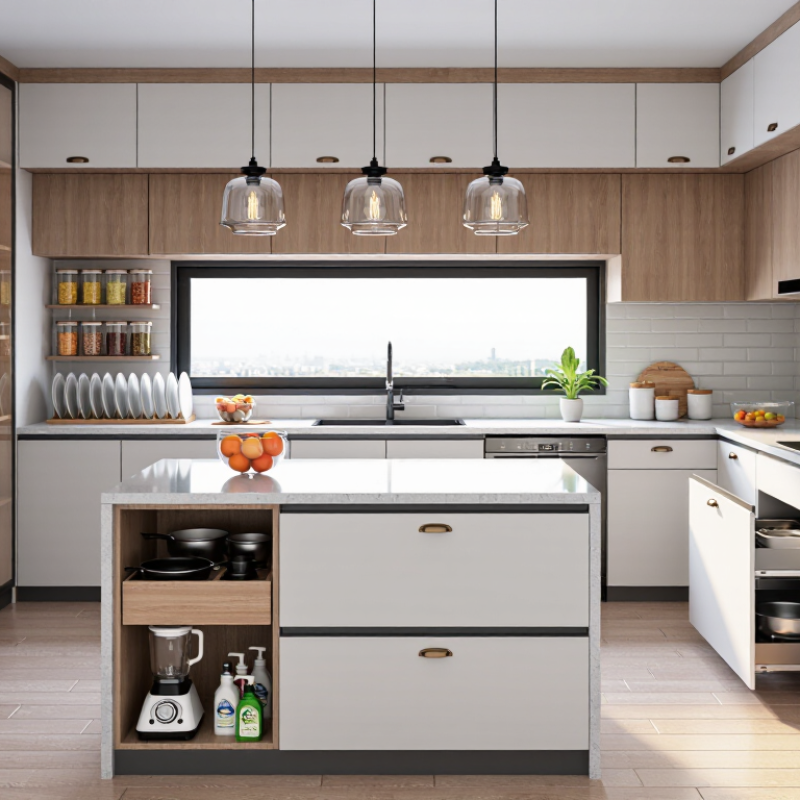
A modern kitchen works better when its zones follow real movement, not a perfect showroom diagram. Divide the room into storage, preparation, cooking, cleaning, and serving areas.
Keep everyday dishes near the dishwasher and dining route. Place knives, boards, and mixing bowls beside the main preparation surface. Cooking tools should stay within one step of the cooktop. This reduces unnecessary walking and prevents crowded crossings.
The 2024 U.S. Houzz Kitchen Trends Study surveyed 1,337 homeowners during kitchen renovations.
It reports that 76% upgraded their cabinets, showing how strongly storage affects renovation decisions.
Use that storage strategically. Reserve lower drawers for heavy pans and frequent utensils. Keep rarely used appliances away from the primary workflow.
A clear counter beside the sink is valuable for rinsing, draining, and temporary placement. Small details matter.
The National Kitchen and Bath Association’s 2024 Design Trends Report also emphasizes practical storage and dedicated work areas.
Separate messy preparation from finished-food plating when space allows. An island can support both tasks, but it should not become a permanent warehouse.
I still leave one drawer imperfectly organized. That is realistic. Kitchens change with habits, children, and new equipment. Review the workflow after a week, then adjust one zone instead of redesigning everything.
How to Organize a Modern Kitchen Efficiently?
A modern kitchen works better when every item has a clear purpose and location. I start by removing duplicates, expired ingredients, and tools unused for one year. The 2024 U.S. Kitchen Trends Study by Houzz reported that 76% of renovating homeowners added or upgraded specialty storage. That demand reflects a practical problem: ordinary cabinets often hide forgotten items. Empty one cabinet at a time. Group cookware, baking tools, food containers, spices, and cleaning supplies.
Keep daily items between waist and shoulder height. Store heavy pans in lower drawers, not overhead cupboards. Place knives, boards, and towels near the food-preparation zone. Use shallow bins for packets and labels facing forward. A simple “one shelf, one category” rule prevents mixed piles. It is not perfect.
Food storage needs special attention. The U.S. Environmental Protection Agency reported that 66.2 million tons of food waste entered the generation stream in 2019, with much of it coming from households, retail, and food service. Visible storage can reduce forgotten ingredients. Put older products in front and mark opened dates on containers. Keep a small basket for food that needs to be used soon.
My own system failed when I stored too many containers without matching lids. I now keep only complete sets. Still, one drawer becomes messy after busy weeks. A five-minute reset every Sunday helps, but it requires honesty. If an item repeatedly stays unused, question its place, not just the clutter.
A modern kitchen works best when storage follows daily habits. Keep plates, glasses, and cooking utensils within one easy reach. Place them near the dishwasher or preparation area. Store heavy pans in deep drawers below the cooktop. Reserve high shelves for serving dishes used only during gatherings. This reduces unnecessary movement and makes routines feel calmer.
The 2024 U.S. Houzz Kitchen Trends Study reports that 76% of renovating homeowners upgraded their cabinets. That figure reflects a strong demand for better storage, not merely new finishes.
The National Kitchen & Bath Association’s 2024 design outlook also highlights organized storage as a continuing kitchen priority. In practice, adjustable dividers can separate knives, lids, and measuring tools. Clear containers help reveal low supplies before they become urgent.
Small changes matter.
I once placed everyday spices beside the oven, but heat and grease made the area unpleasant. A cooler drawer nearby worked better.
Still, perfect systems rarely stay perfect. Family routines change, and some “efficient” zones may become awkward after a month. Review storage after real use. Keep frequently used items between waist and shoulder height, where reaching feels natural. Put rarely used appliances in a pantry, but leave enough clearance for safe removal. An organized kitchen should support people, not force them into rigid habits.
Efficient kitchen organization begins with measuring real habits, not copying showroom layouts. Houzz’s 2024 U.S. Kitchen Trends Study reports that 76% of renovating homeowners upgrade their cabinets. That investment works harder when every cabinet has a clear task. Store plates near the dishwasher, pans beside the cooktop, and daily glasses at eye level. Deep drawers usually outperform low shelves for pots because they reduce bending and reveal the entire stack. Add dividers, but leave several centimeters of flexibility. Kitchens change.
Drawers need zones, not random containers. Use shallow inserts for cutlery, cooking tools, and measuring spoons. Keep knives secured in a fitted block or drawer insert. Counters should hold only equipment used most days. A clear 60-centimeter preparation area makes chopping safer and less frustrating. I still misjudge this space sometimes. A coffee appliance can quietly consume half the worktop.
Pantry organization depends on visibility and rotation. The U.S. Environmental Protection Agency reports that food waste remains a major part of municipal solid waste, making better stock control practical, not decorative. Store older items in front, group foods by use, and label open packages with dates. Transparent bins help, although too many bins can hide forgotten products. The 2024 Kitchen Trends Report from the National Kitchen and Bath Association highlights pantry storage and functional organization as continuing design priorities. Keep one shelf deliberately open. You will need it.
How to Organize a Modern Kitchen Efficiently?
An efficient kitchen depends on repeatable habits, not expensive storage. In my own cooking space, I keep daily tools within one arm’s reach. Plates sit near the dishwasher, while pans stay beside the cooktop. This reduces unnecessary movement during busy meals. I also group ingredients by use, not only by type. Rice, spices, and measuring tools share one working zone. It feels faster. Sometimes, though, I place items back carelessly.
A reliable system needs clear limits. Keep one drawer for cooking utensils and remove duplicates every few months. Store heavy cookware below waist level to reduce strain. Place sharp tools in a secure holder, away from children and crowded surfaces. Use transparent containers for dry foods, and label purchase dates when freshness matters. Leave a small gap between stored items. That gap makes cleaning possible and exposes spills early. Shelves should not become storage walls. I learned this after losing a packet behind several jars.
Review the kitchen after a normal week, not an idealized weekend. Notice where crumbs collect and which objects remain on the counter. Adjust the system around actual behavior. A rarely used appliance may deserve a higher shelf, while a daily cutting board needs immediate access. I still test new arrangements slowly. Some changes look tidy but make cooking awkward.
Use storage, preparation, cooking, cleaning, and serving zones. Arrange them around real movement, not showroom symmetry.
Keep them near the dishwasher and dining route. This shortens carrying distance and reduces awkward crossings.
Store pans, spatulas, and oven tools within one step of the cooktop. Keep heavy pans in deep lower drawers.
Place knives, cutting boards, mixing bowls, and measuring tools nearby. A clear counter helps with chopping and temporary placement.
Keep frequent items between waist and shoulder height. Put rarely used serving dishes on higher shelves.
Place them in a pantry or distant cabinet with enough removal space. A tight shelf creates frustration and possible accidents.
Yes, it can support preparation and plating. Avoid turning it into a permanent storage warehouse.
Test the layout for one week, then adjust one zone. Real habits reveal problems that planning may miss.
Do not place spices beside a hot oven. Heat and grease can make that drawer unpleasant.
No. One imperfect drawer may reflect real life. People, children, and equipment change over time.
Learning how to organize a modern kitchen efficiently starts with creating clear zones for food preparation, cooking, cleaning, and storage. Arrange related tools and ingredients near the areas where they are used most, then remove clutter by sorting every item into practical categories. Donate, recycle, or relocate things that are rarely used, and keep frequently needed utensils and ingredients within easy reach.
Make the most of cabinets, drawers, counters, and pantry space by using vertical areas, adjustable dividers, and labeled categories. Store heavier items in lower cabinets, keep everyday dishes at a comfortable height, and reserve higher or less accessible spaces for occasional-use equipment. Counters should remain as clear as possible to support a smooth workflow. Finally, maintain the system by returning items to their assigned locations, reviewing supplies regularly, and adjusting storage as your cooking habits change.