Fance Home
A comfortable home does not require a full renovation or a showroom-sized budget. A well-placed lamp, a secondhand side table, or freshly washed curtains can change how a room feels. The challenge is choosing updates that make a visible difference without spending twice on the same problem. That is what “how to decorate a home on a budget” really means: setting priorities, using what you already own, and spending carefully where it counts.
The scale of home spending makes that distinction important. Harvard’s Joint Center for Housing Studies estimated that U.S. homeowners would spend $485 billion on improvements and repairs in 2023. That figure covers far more than decorating, so it is not a suggested budget for a living room. It does show why small, planned choices matter. Start by measuring before buying, checking paint samples in daylight, and comparing the cost of repairing an item with replacing it. A $20 cushion cover may refresh a chair; it will not fix a sagging frame. Details matter. The ideas in this guide focus on affordable changes, practical trade-offs, and room-by-room choices that can be adapted to different homes. Some projects will look better in real life than in a photo. And sometimes, the honest choice is to wait.
Set a total decorating limit before browsing or visiting a store. Write down the money available, then leave a small cushion for unexpected costs. A useful budget should not depend on skipping bills or essentials. Keep it visible. List the changes you notice each day: dim lighting, a scratched table, or bare windows. Seeing them together can separate real needs from passing inspiration.
Rank each change by how often it affects you and how much it costs. A loose chair or poor task lighting may deserve attention before decorative cushions. Prioritize safety and daily function, then consider appearance. If the room feels dull, moving a lamp or rearranging furniture costs nothing. Fresh paint may help, but only if the walls are in sound condition and the cost fits your plan. Measure carefully; a missed measurement can turn a bargain into an expensive mistake.
Set a spending limit for each priority, and check prices before committing. Reserve part of the budget for supplies, delivery, or small repairs, since these costs are easy to overlook. Track purchases in a simple note on your phone. Estimates will not always be exact. I sometimes find that the item I wanted most matters less once the practical problems are fixed, so leave room to rethink the list before buying everything.
A scratched side table or faded dresser can become a useful focal point with paint and a little patience. Remove the drawers and handles, then clean every surface with mild soap and water. Let the wood dry fully. Lightly sand glossy areas so the new finish can grip, and wipe away dust with a clean cloth. Apply thin coats rather than one thick layer; thick paint can leave ridges around corners. Work near an open window, and follow the paint label’s drying and ventilation instructions. Small changes matter.
Fabric can soften a chair seat or cover a worn bench cushion without replacing the furniture. Measure the seat, adding enough extra fabric to fold underneath. Use a staple gun to secure opposite sides first, pulling the cloth taut but not stretching it out of shape. Check the front edge before finishing the corners. They can look lumpy. I learned that the hard way on a kitchen chair. If the foam is flattened or crumbling, replacing it may make the seat more comfortable and help the fabric sit evenly.
New hardware offers a quick update, especially when old knobs are scratched or loose. Measure the distance between existing screw holes before buying replacements, since mismatched spacing can mean extra repair work. Keep the original handles in a labeled envelope in case you change your mind. A warm paint color with simple metal pulls often feels balanced, but test one combination in the room’s natural light. It may look different by evening.
Estimated DIY material costs in U.S. dollars for one small-to-medium furniture piece. Prices vary by piece size, condition, and local materials; labor and tools are not included.
| # | Budget-Friendly Update | Typical Materials Cost | Approx. Project Time | Good for | Practical Tip |
|---|---|---|---|---|---|
| 1 | Paint a wood dresser or side table | $25–$70 | 1–2 days, including drying | Dressers, side tables, bookcases | Clean and lightly sand the surface first; use a suitable primer if the existing finish is glossy or stained. |
| 2 | Replace cabinet knobs or drawer pulls | $10–$40 | 30–60 minutes | Dressers, cabinets, desks | Measure the distance between existing screw holes before buying pulls to avoid drilling new ones. |
| 3 | Re-cover a chair seat with fabric | $15–$50 | 1–2 hours | Dining chairs, stools, benches | Choose durable upholstery fabric and add a little extra for wrapping around the underside of the seat. |
| 4 | Refresh a tabletop with sanding and a new finish | $20–$60 | 1–2 days, including drying | Dining tables, coffee tables, desks | Test the finish on an inconspicuous spot, and follow the product’s instructions for drying and ventilation. |
| 5 | Paint only the legs or lower section | $15–$45 | 4–8 hours, including drying | Chairs, tables, cabinets | Use painter’s tape to create a clean boundary and protect the unpainted surface. |
| 6 | Add peel-and-stick covering to drawer fronts | $15–$45 | 1–3 hours | Drawer fronts, shelves, cabinet interiors | Measure each surface carefully and apply the covering to a smooth, clean surface to reduce bubbles. |
| 7 | Replace worn chair or bench cushion foam | $20–$60 | 1–2 hours | Dining chairs, benches, window seats | Measure the existing cushion and choose foam suited to the seat’s thickness and shape. |
| 8 | Paint a metal frame or furniture base | $15–$40 | 4–8 hours, including drying | Metal chairs, table legs, bed frames | Remove loose rust and use paint labeled for metal; apply light coats for a more even finish. |
| 9 | Replace a damaged drawer bottom or shelf panel | $10–$40 | 1–3 hours | Dressers, cabinets, bookcases | Measure the opening before purchasing a replacement panel, and check that it fits without bowing. |
| 10 | Clean, polish, and tighten existing furniture | $5–$25 | 30–90 minutes | Wood furniture, chairs, tables | Use a cleaner appropriate for the surface, tighten loose fasteners, and test polish in a hidden area first. |
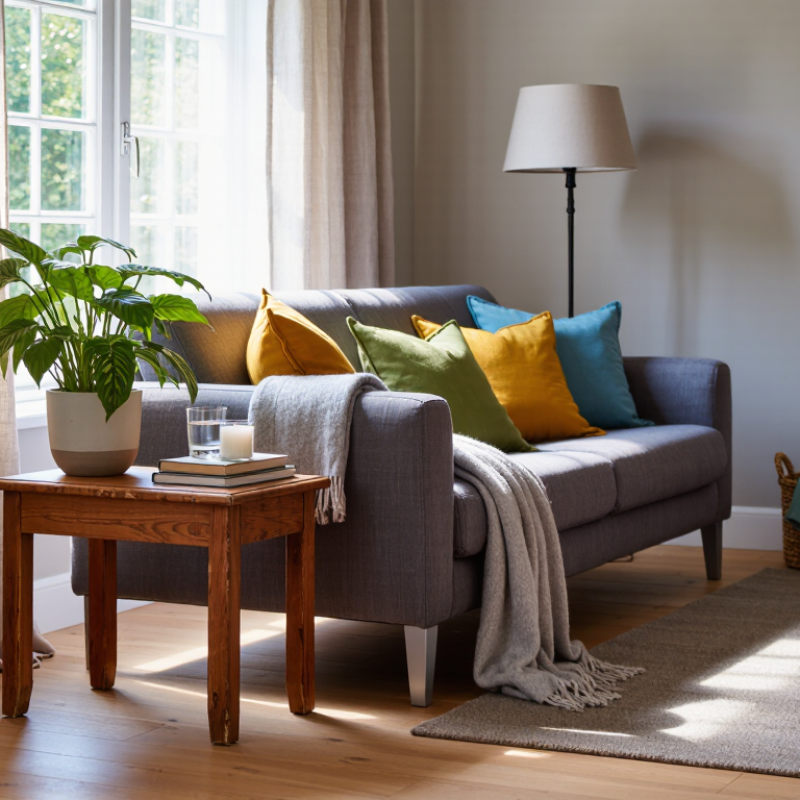
Textiles can bring color and warmth into a room without replacing furniture. Try a rust-colored cushion on a neutral sofa, or hang a woven throw over a plain chair. A secondhand tablecloth can become a small curtain or a cover for a scratched side table. Texture matters, too. Pair smooth cotton with chunky knit or linen for a layered, lived-in feel. Keep the main colors related, but they do not need to match perfectly.
Lighting gives those fabrics—and the rest of the room—more character. Use a warm-toned bulb in a table lamp near a reading chair, then add a simple shade to soften glare. A floor lamp can brighten a dark corner without costly rewiring. I’ve found that one well-placed lamp often feels better than several bright ceiling lights. Still, a shade that looks lovely in daylight may cast a dull color at night, so check it after sunset.
Tips: Shop your own cupboards before buying anything. Move a lamp, swap cushion covers, and test fabric colors beside a window at different times of day. Avoid blocking walkways with cords, and keep textiles away from hot bulbs. If a combination feels slightly off, live with it for a few days before changing everything.
A room can feel personal without costly art. Choose one clear focal point, such as the wall above a small dining table. Make a simple canvas from leftover fabric, a thrifted frame, or paper painted in two calm colors. Keep the palette connected to nearby cushions or rugs. A limited color scheme helps handmade pieces feel intentional.
Try the arrangement on the floor before hanging anything. Place a few frames or paper shapes together, then step back and check the balance. The first arrangement may feel crowded; removing one piece often makes it calmer. Use removable hanging strips only when suitable for your wall surface, and follow their weight limits.
Plants add a living focal point through changing leaves and natural texture. Place a taller plant near a bright window, then set a small cutting in a reused glass jar on a shelf. Check the plant’s light needs and confirm it is safe for household pets. Don’t choose a plant only because it looks good in a photo. Some leaves brown indoors, which can be a clue to adjust light or watering. Keep the pot simple. Less can work.
Thrift shops can make a room feel personal without making the budget groan. Look for sturdy basics: a small wooden stool, a ceramic bowl, or a frame with intact corners. Check items in daylight when possible, and test drawers, hinges, and chair legs before buying. A low price is not a bargain if a piece needs costly repairs. I have brought home things that looked charming in the shop and felt awkward at home.
Sales can help with practical items such as lampshades, cushion covers, and plain storage baskets. Compare prices across a few shops, and bring measurements of your space. A tape measure can prevent a narrow hallway from acquiring one very wide table. Set a spending limit before browsing; sale signs have a way of making unnecessary things seem urgent.
Repurposing is often the cheapest option. Turn a clean glass jar into a vase, or use leftover paint to refresh a tired picture frame. Sanding and painting can improve simple furniture, but skip projects that need tools or skills you do not have. I once chose a color too quickly, and the result was louder than expected. Test paint on a hidden spot first, then live with it for a day. Small changes count.
Remove the drawers and handles. Clean every surface with mild soap and water, then let it dry fully. Lightly sand glossy areas and wipe away dust. Apply thin coats near an open window, following the paint label’s instructions.
Measure the seat with extra fabric for folding underneath. Staple opposite sides first, keeping the cloth taut without stretching it. Check the front edge before folding the corners. Mine once looked lumpy.
Measure the distance between the existing screw holes. Mismatched spacing can mean extra repair work. Keep the original handles in a labeled envelope, just in case.
Choose one focal wall and use colors that connect with nearby cushions or rugs. Arrange frames on the floor before hanging them. Remove one piece if the group feels crowded. Less can work.
Match each plant to the available light and check whether it is safe for household pets. Place a taller plant near a bright window. A small cutting can sit in a reused glass jar. Brown leaves may signal a need to adjust light or watering.
Check items in daylight when possible. Test drawers, hinges, and chair legs before buying. Bring room measurements and a tape measure. A low price may hide costly repairs.
Set a spending limit before browsing. Compare prices and measure your space first. A sale sign can make an unnecessary basket feel urgent. It happens.
Turn a clean glass jar into a vase, or refresh a picture frame with leftover paint. Test the color on a hidden spot and wait a day. I once chose too quickly; the result was louder than expected. Skip projects requiring tools or skills you do not have.
Decorating a home on a budget starts with deciding how much you can spend and identifying the changes that will make the biggest difference. Rather than trying to update every room at once, focus on a few priorities. Give existing furniture a fresh look with paint, new fabric, or replacement hardware, and use affordable textiles and lighting to bring in color, warmth, and personality.
Small, thoughtful details can make a room feel complete without a large investment. Create a focal point with handmade art or a few well-placed plants, and look for useful, characterful decor at thrift shops and sales. Repurposing items you already own can also reduce costs and give your space a more personal feel. With patience and creativity, how to decorate a home on a budget becomes less about buying more and more about making smart use of what you have.
