| Product Name |
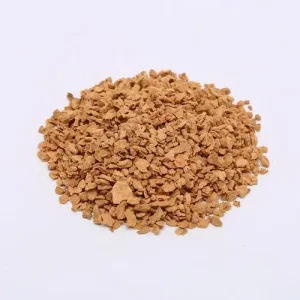
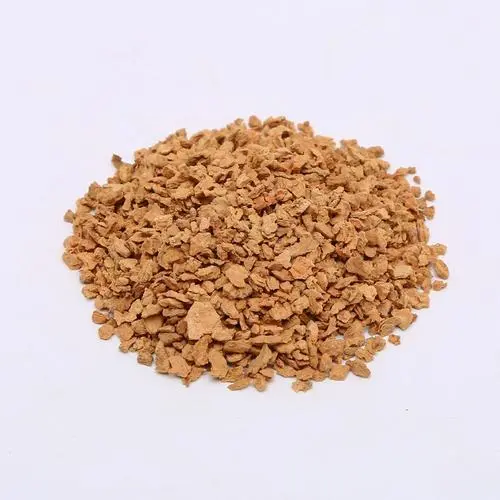
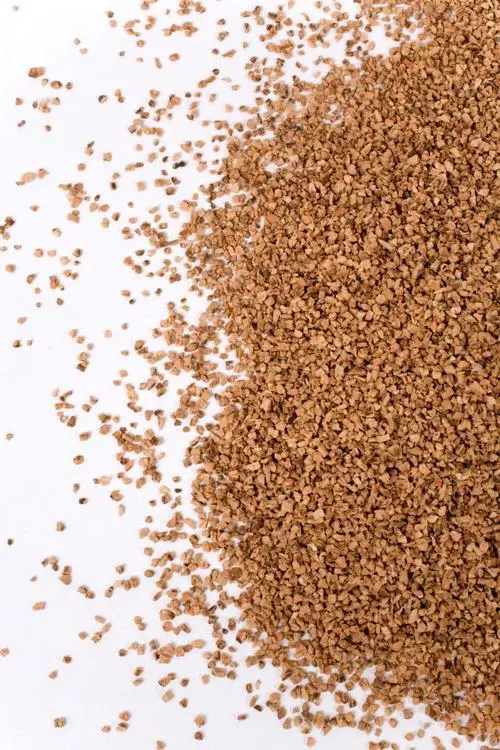
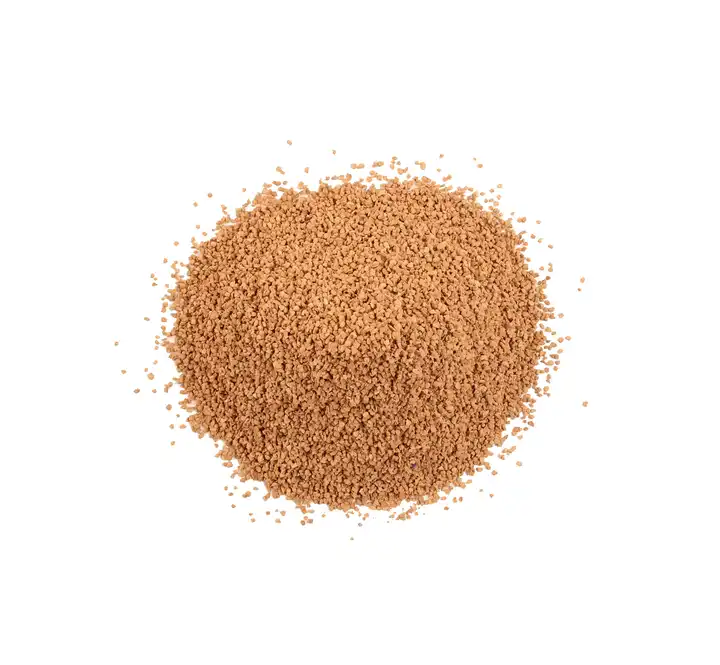
Granulated Cork |
| Specification |
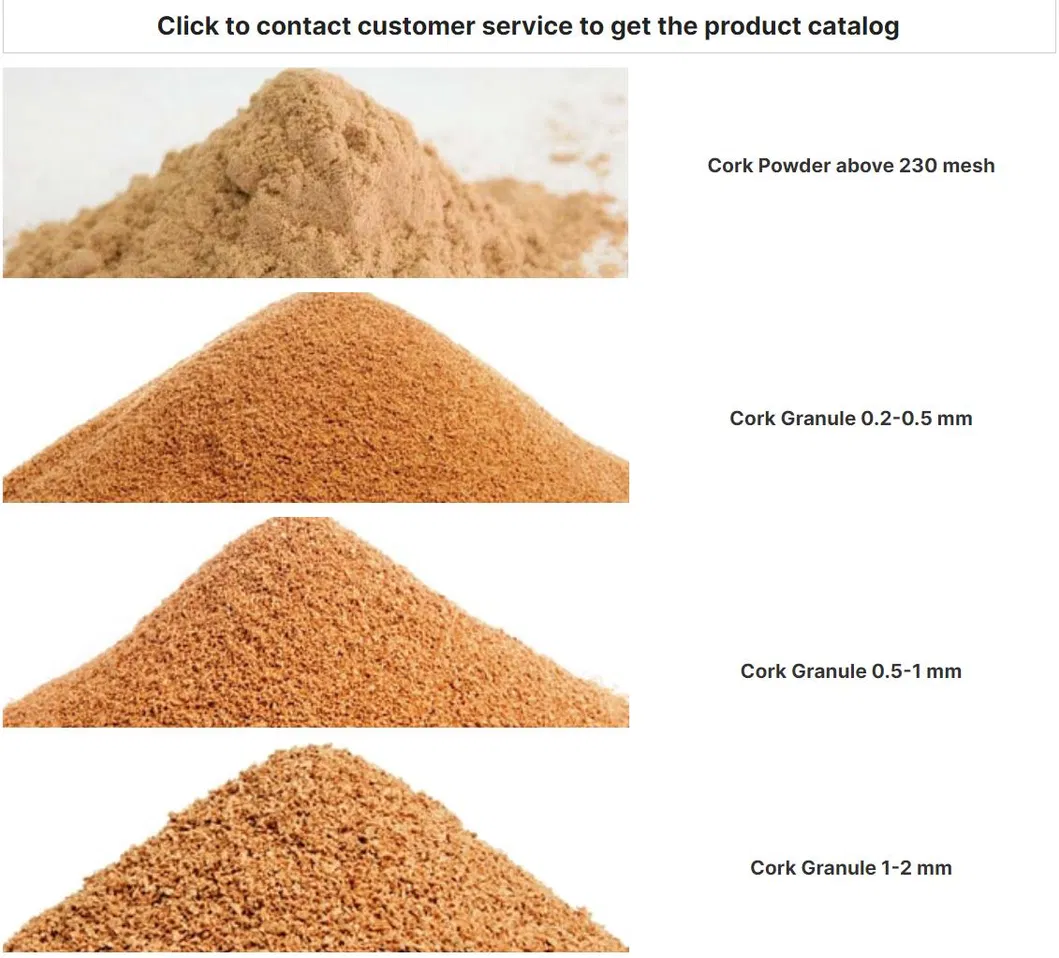
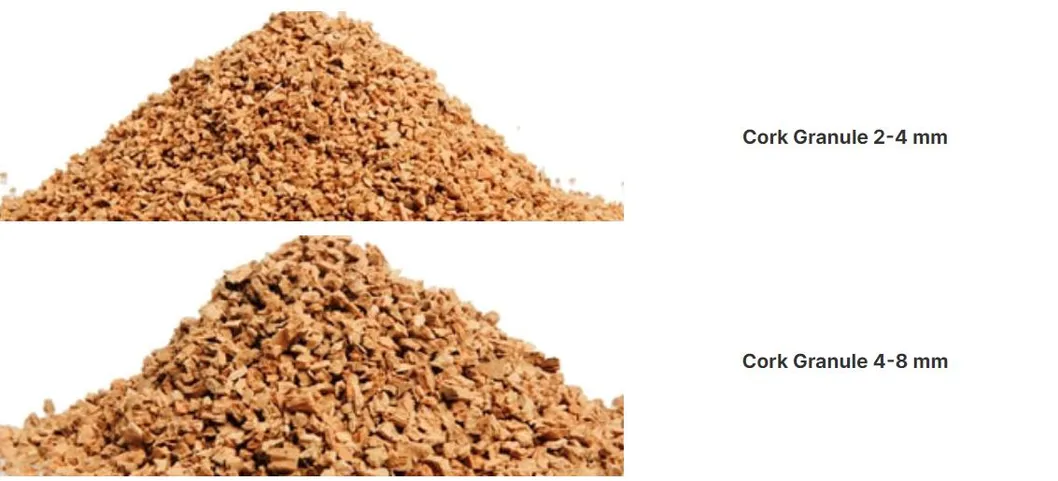
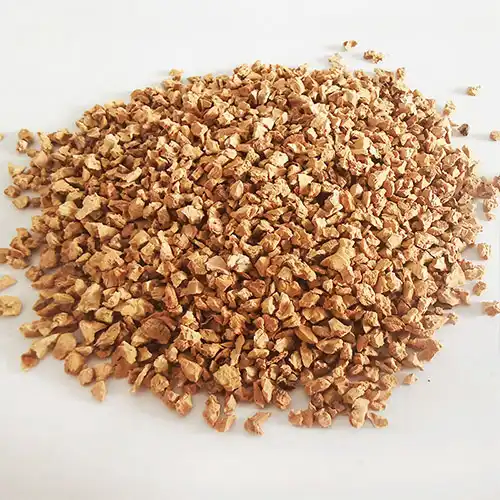
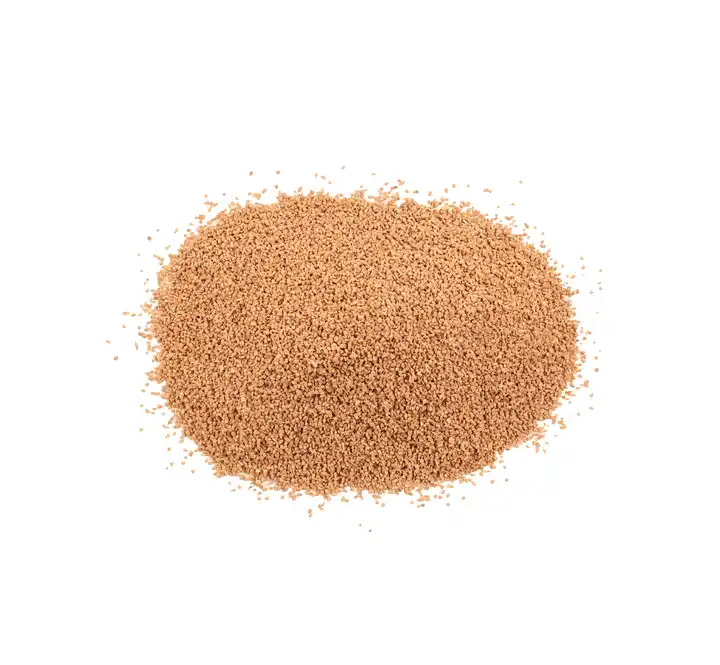
Granule Size: 0.5-1mm, 1-4mm, 4-6mm, 6-8mm, 8-12mm
Density: 65-130kg/m3 |
| General Usage |
Composite cork products, sports field infill, soil conditioner, agglomerated wine stoppers, cork flooring, brake shoes, clutch plates, shoe soles, insulation cork blocks, yoga bricks and mats. |
Cork Granule Properties
Cork granule offers a range of benefits including heat insulation, heat preservation, sound insulation, shock absorption, elasticity, lightness, and friction.
Key Applications
- Lightweight cement and construction weight loss
- Rubber cork and industrial friction materials
- Bicycle brakes and motorcycle friction components
- Footwear industry (Birkenstock style shoes and soles)
- Sports equipment (Badminton tips, whistles, buoys)
- Lead-acid battery grid casting (mold release agent)
Technical Advantages
- Ultrafine cork particles (more than 230 mesh available)
- Even dispersion for consistent manufacturing
- Long use cycle and durability
- Flame retardant and antistatic properties
- Excellent heat insulation and ventilation
?
Frequently Asked Questions
1. What sizes of granulated cork do you provide?
We offer a variety of sizes including 0.5-1mm, 1-4mm, 4-6mm, 6-8mm, and 8-12mm. Ultrafine powder (more than 230 mesh) is also available for specific industrial uses.
2. Are you a manufacturer or a trading company?
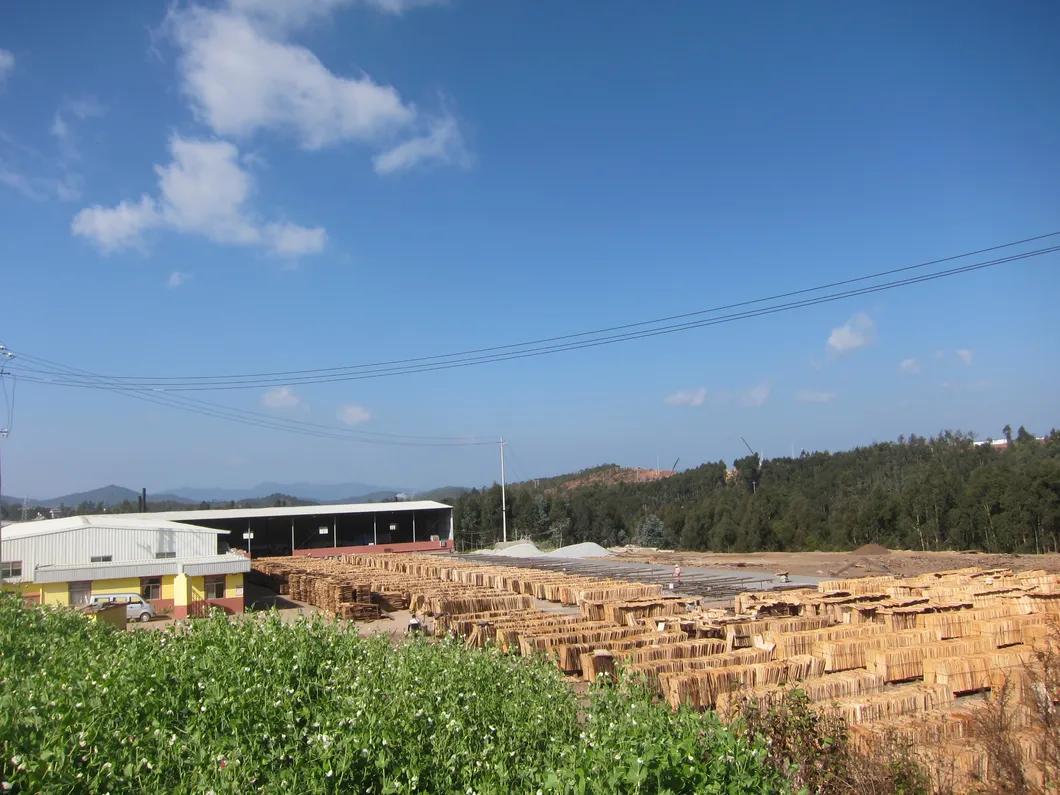
We are a group enterprise with multiple specialized factories. Our primary production facilities have been operating since 2007.
3. Do you support OEM or ODM customization?
Yes, we provide full OEM/ODM services. We can produce items based on your drawings or samples, including customized materials, sizes, colors, and logo applications using laser cutting or silk-screen printing.
4. Can I request a sample of the cork granules?
We provide samples free of charge. However, the freight or shipping costs are to be covered by the customer.
5. What are the primary benefits of using cork granules in construction?
Cork granules provide excellent heat insulation, sound absorption, and flame retardancy. They are frequently used in lightweight cement to reduce weight while maintaining thermal performance.
6. What is the typical lead time for production?
The sample lead time is approximately 7 days. For bulk production, it generally takes 10-25 working days depending on the order quantity and customization requirements.
 Fance Home